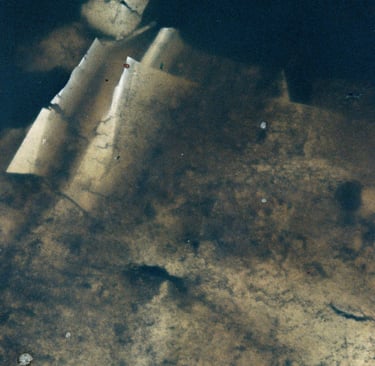
Berlin, 2012

Yaniss Beni was born in Paris, to French, Polish and Algerian parents, and grew up in its suburbs. He came to images through analogue photography, and then through acrylic painting.

He painted in layers. Each one covered the last without cancelling it, so that a finished surface held its own history rather than a final state. He treated a canvas as something alive rather than something to be finished: it changed for as long as he kept returning to it, it took on whatever surrounded it while it was being made, and what it became was never quite what he had decided.

He has since lived in seven countries. Paint and film travel badly. The material accumulates, dries, takes up room, and ends up in storage. Working digitally answered that before it answered anything else.
It turned out to do what the painting had done. Since 2023, each piece begins as a written armature that he reworks the way he reworked a canvas, and passes through layers of image-generation models, some trained on his own paintings and photographs. Nothing is made in one pass.

The question that came out of this, of how anything holds a form without settling into one, took him to the physics of systems that hold together only for as long as something keeps passing through them. His current body of work, Far From Equilibrium (2026), is built around three regimes, three conditions under which a form maintains itself without hardening or dissolving. It follows Les Corps Inquiets (2025), a series set in interwar Paris, which also exists as a screenplay written in the structure of a silent film.

The prints are produced in the French Basque Country, on Japanese paper, as unique pieces. He lives in Copenhagen.

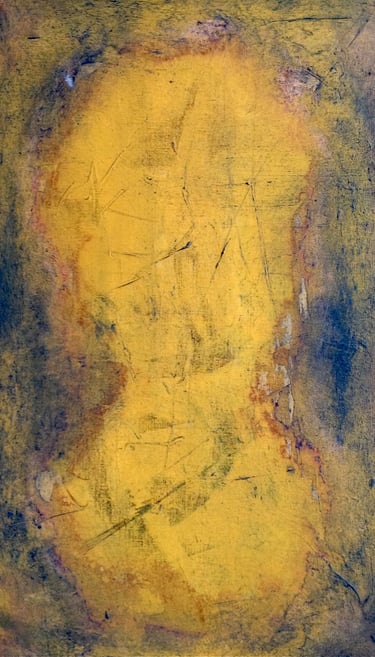
108.4, 2015

Acrylic on linen

Past memories, 2012

Gelatin silver print, 30 × 40 cm

Yaniss Beni

Objets Troublés 5, 2025

Pigment Print

Yaniss Beni was born in Paris, to French, Polish and Algerian parents, and grew up in its suburbs. He came to images through analogue photography, and then through acrylic painting.

He painted in layers. Each one covered the last without cancelling it, so that a finished surface held its own history rather than a final state. He treated a canvas as something alive rather than something to be finished: it changed for as long as he kept returning to it, it took on whatever surrounded it while it was being made, and what it became was never quite what he had decided.

He has since lived in seven countries. Paint and film travel badly. The material accumulates, dries, takes up room, and ends up in storage. Working digitally answered that before it answered anything else.
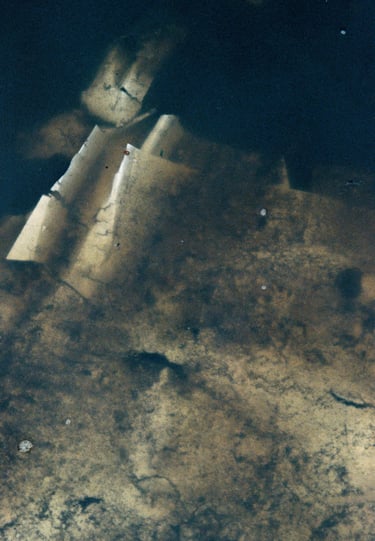
It turned out to do what the painting had done. Since 2023, each piece begins as a written armature that he reworks the way he reworked a canvas, and passes through layers of image-generation models, some trained on his own paintings and photographs. Nothing is made in one pass.

The question that came out of this, of how anything holds a form without settling into one, took him to the physics of systems that hold together only for as long as something keeps passing through them. His current body of work, Far From Equilibrium (2026), is built around three regimes, three conditions under which a form maintains itself without hardening or dissolving. It follows Les Corps Inquiets (2025), a series set in interwar Paris, which also exists as a screenplay written in the structure of a silent film.

The prints are produced in the French Basque Country, on Japanese paper, as unique pieces. He lives in Copenhagen.

108.4, 2015

Acrylic on linen

Past memories, 2012

Gelatin silver print, 30 × 40 cm

Yaniss Beni

Objets Troublés 5, 2025

Pigment Print

Melbourne, 2025

Melbourne, 2025

Not currently represented.

Group Exhibitions
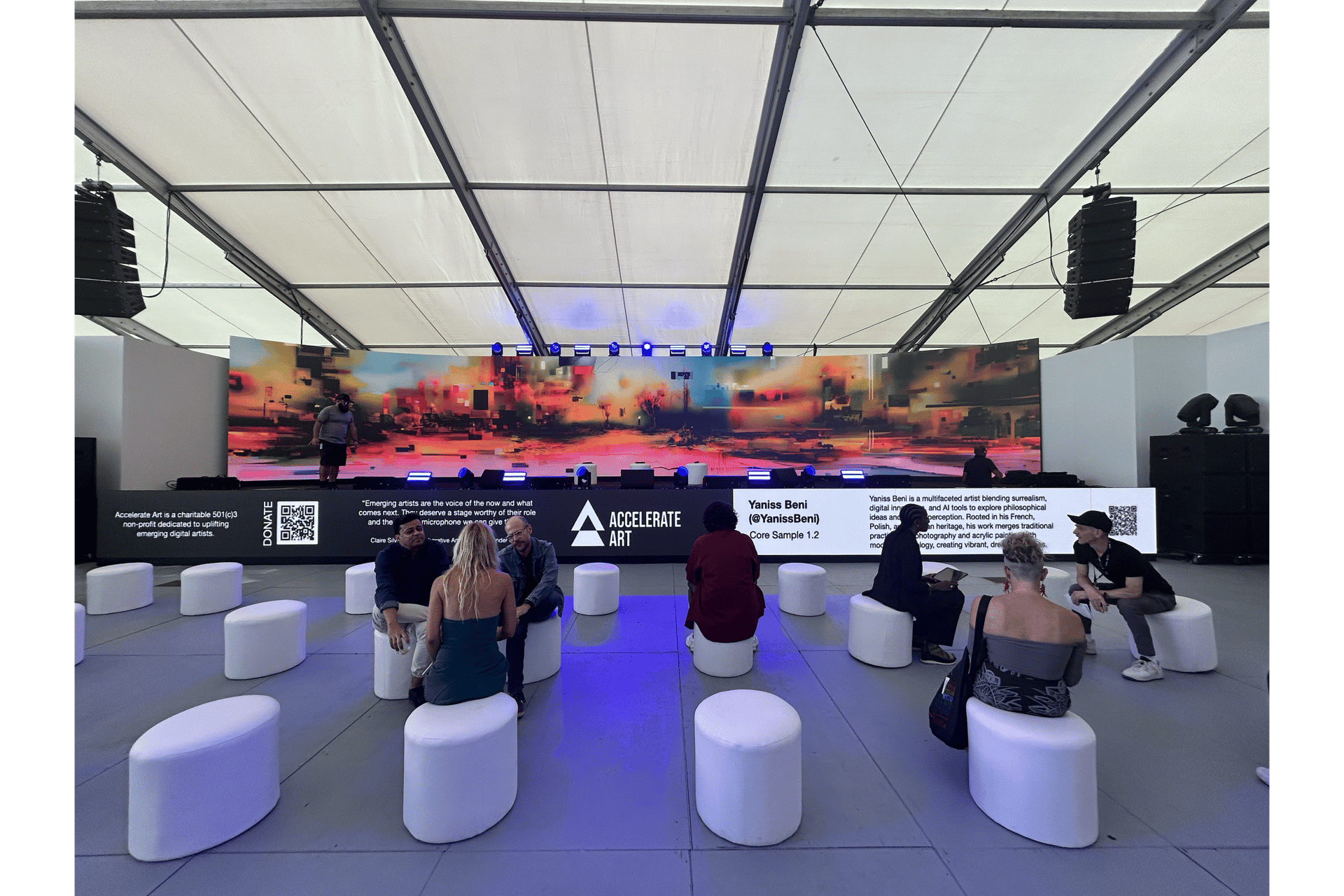
2024 Accelerate Art, Miami, December
2024 Espai(b), Barcelona, July to September
2024 Eternal Peace, K-Haus, Basel, May
2024 Truth Unveiled, Colonna Contemporary, Wayne, Pennsylvania, March

Solo Exhibition
2012 Pictorial Photography, Gallery Knoth and Kruger, Berlin, June to July

Awards
2025 Art Crush, Australia. Selected for screen exhibition in Melbourne, Sydney and Canberra.

Collections
Private collections, France, United Kingdom, Spain, Netherlands

Installation view, 2026

Private residence, France

Process

There are no images at the start, only an armature of words. Built and reworked over several years, it combines technical, descriptive, functional and poetic terms. It is worked like a block: cutting into it, taking away, returning to one edge. It is not an instruction addressed to a machine; it is a material that the machine and the hand take up in turn.

The armature passes through several generations of image-generation models. The older ones make errors the recent ones no longer make, and those errors are sought after; they do not repeat, neither from one model to another nor from one pass to the next. The model generates, the artist selects, and the images kept return into the chain. Earlier states are kept, and he goes back to them, as he went back to a canvas.

Adaptation models are trained case by case on sets composed by hand: earlier acrylic paintings and analogue photographs, mixed with images already obtained. The proportion is not a setting; it is decided each time. This is the system’s outside: without it, a model retrained on its own images grows poorer and converges on the same.

These models learn by degrading images down to noise, then retracing the path. To produce an image, for them, is to rebuild from what has been lost. The degradation visible in the works extends that movement; it is then worked by hand, image by image, in the framing, the colour and the surface.

Based in Copenhagen. Production in the French Basque Country.

yanissbeni@protonmail.com
Instagram @yanissbeni

Based in Copenhagen.
Production in the French Basque Country.

yanissbeni@protonmail.com
Instagram @yanissbeni

black blue and yellow textile